
What Goes Into Men's Wellness Formulas
If you want to compare men's supplements without guessing, learn the ingredients first. This guide covers the botanicals and nutrients that appear most often on shelves in Indonesia, and what to check on a label before you buy.
Read the block, not the badge
Why Ingredient Names Matter More Than Category Names
Retailers group men's supplements by benefit, so the same shelf can hold a "stamina" product, a "vitality" product, and a general multivitamin with very different contents. NATURELINE Men's Health Kapsul, for instance, is a herbal capsule built around four botanicals, while GNC Mega Men is a men's multivitamin listing vitamins A, C, D, E, and K. Both are legitimate products — they are just not interchangeable.
Once you can read the ingredient block, category labels stop doing the deciding for you. That is the whole point of learning natural supplements for men by their contents instead of their shelf signage: the same word on two boxes can describe two completely different formulas.
Two products, two shelves
- NATURELINE Men's Health Kapsul Herbal capsule, four botanicals, 30-capsule pack
- GNC Mega Men Men's multivitamin listing vitamins A, C, D, E, and K
Grouped by benefit, they look like neighbours. Grouped by ingredients, they are not.
The botanicals you will meet most often
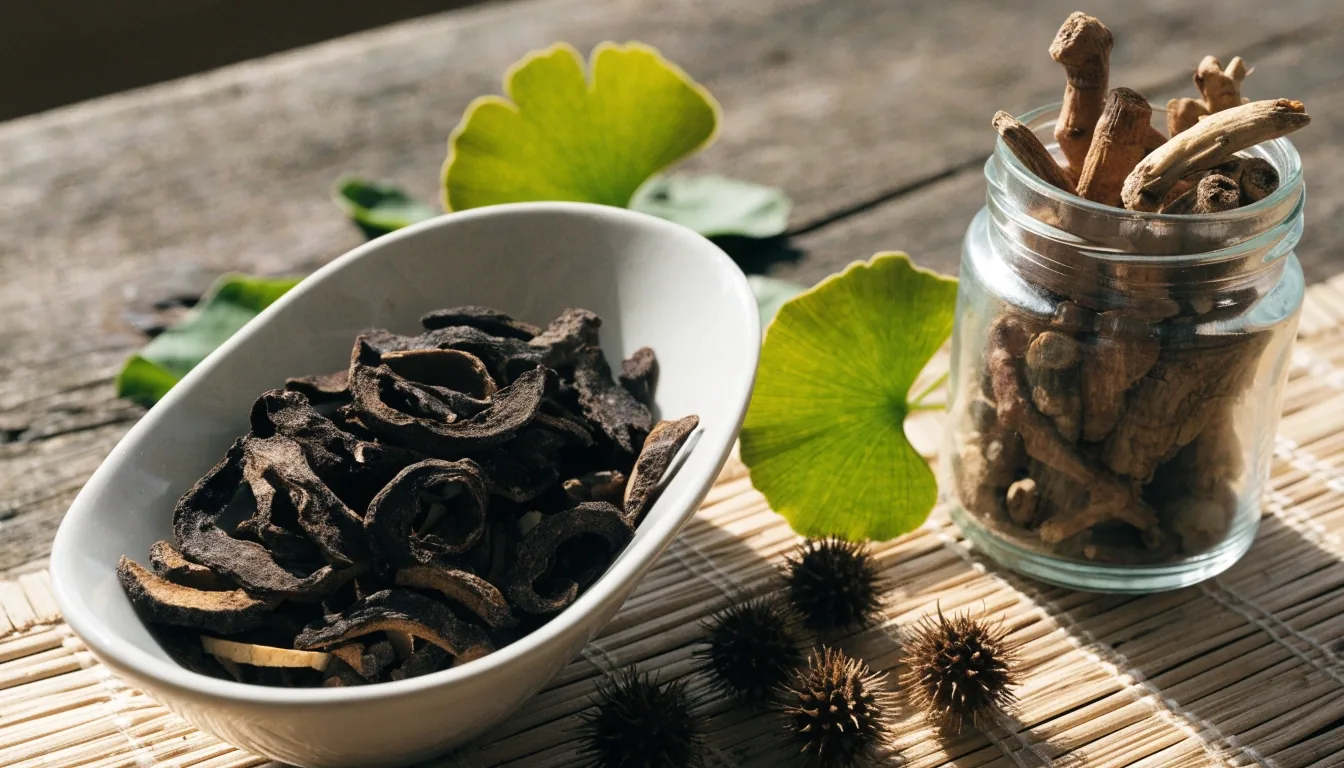
Four names carry most of the conversation in Indonesian men's wellness formulas. Here is what each one is, where it shows up, and what the label should tell you.
Tongkat Ali
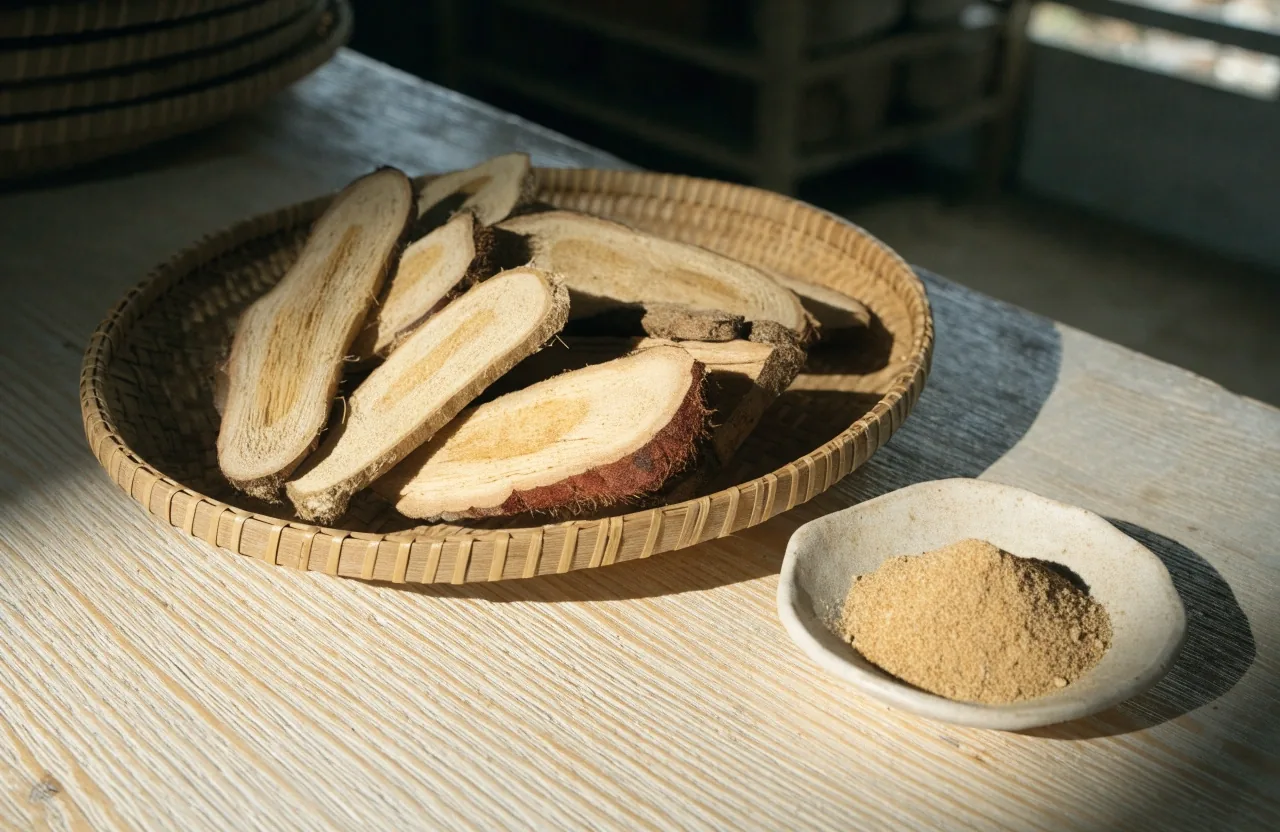
Strongly associated with Southeast Asian men's wellness products — one of the most recognizable botanicals in Indonesian and regional supplement conversations. Its reputation is tied to natural heritage and premium male wellness branding, which is exactly why it appears on so many labels. When you see it, check the extract details rather than the word alone: does the label name the plant part or extract, and is a daily serving stated? Familiarity is useful, but it is not the same as a detailed label.

Panax Ginseng
A classic botanical that shows up in blended men's capsules rather than as a standalone category here. NATURELINE Men's Health Kapsul includes it alongside Epimedium, Pasak Bumi, and Ginkgo biloba in its 30-capsule format. Products that combine several botanicals are common in Indonesia, and Panax ginseng is one of the ingredients that signals a formula is aiming at general men's wellness rather than a single benefit. As always, the daily serving and the full ingredient list tell you more than the presence of any one name.

Tribulus
A commonly recognized botanical in men's wellness products, and it also appears as the headline of blended formulas. Wellness Tribulus Stack, listed in Guardian Indonesia's men's health assortment, is positioned as a stack, which implies multiple ingredients or a blended formula rather than a single botanical. That is a useful pattern to recognize: when a product calls itself a stack, read the full panel. The market's appetite for ingredient-led blends is real, and stacks are how that appetite shows up on shelves.
Pasak Bumi
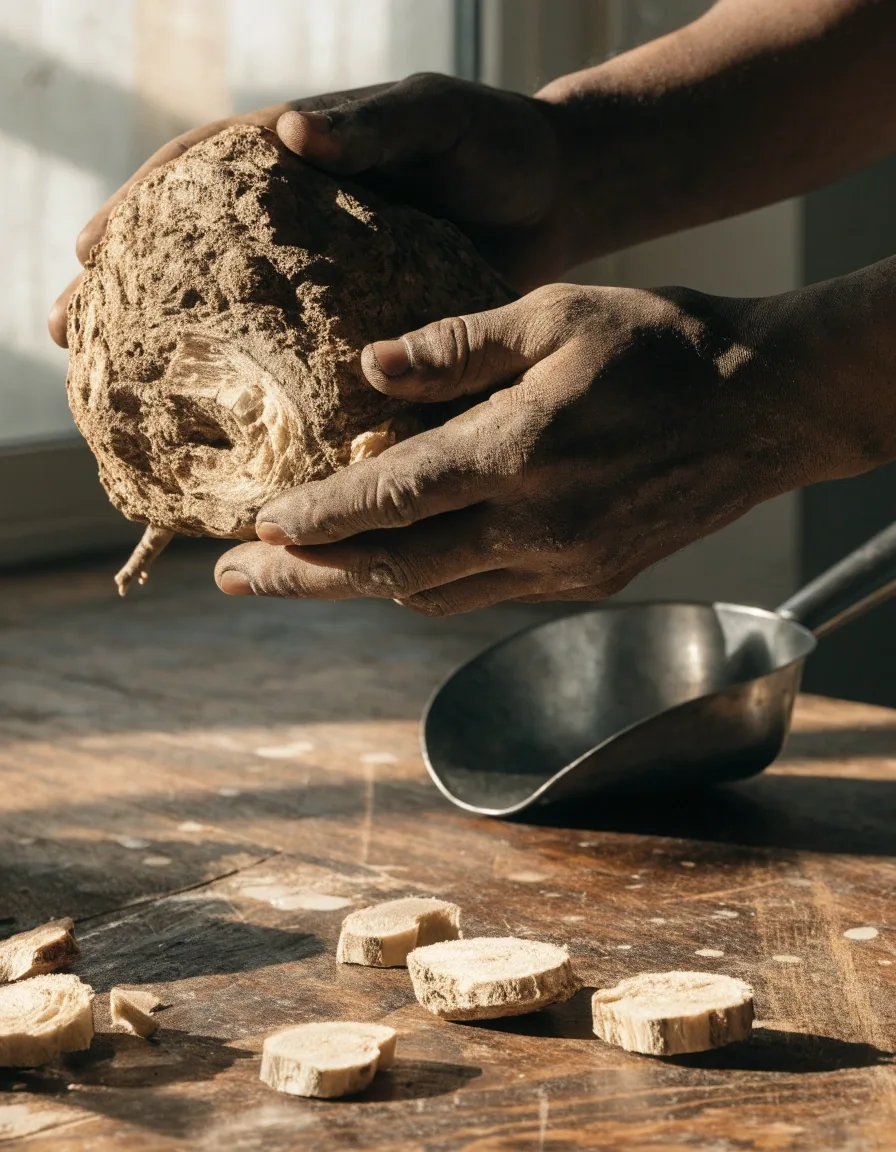
A regional botanical with local recognition. Its name is easy to print on a label and hard to evaluate from that name alone — which is less a reason to avoid it than a reason to read the panel more carefully. It sits in the same blend as Epimedium, Ginkgo biloba, and Panax ginseng in products like NATURELINE Men's Health Kapsul, and seeing four or more botanicals grouped in one capsule raises a fair question: how much of each is actually included?
Epimedium, Pasak Bumi, Ginkgo Biloba
These three appear together in NATURELINE Men's Health Kapsul alongside Panax ginseng. Pasak Bumi is a regional botanical with local recognition, Epimedium is common in blended men's formulas, and Ginkgo biloba is a well-known plant extract that shows up across supplement categories. Seeing them grouped tells you the product is a botanical blend aimed at general men's wellness. It also means the label deserves a careful read, because four or more botanicals in one capsule raise the question of how much of each is included.
How to read a blend panel
When a formula lists several botanicals, three things tell you whether the page is giving you enough to work with. Check each row against the product page you are reading.
Named ingredients
A panel that lists each botanical by name is easier to compare than one that hides them behind a single blended entry. Named entries let you look up the same ingredient in another product and see whether the two are actually describing the same thing.
01Amount per serving
Where the label gives a quantity, use it. If a product page lists ingredients but not amounts, that is a transparency gap worth noting. It does not make the product bad, but it gives you less to work with when you compare it against a competitor.
02Clear daily dose
One capsule daily, two tablets with food — pick the product whose instruction you can actually follow. A dose that depends on guessing is a dose you will stop taking. The pack size should roughly match how long that pace lasts.
03Compare that against a multivitamin label, where individual nutrient amounts are usually stated per tablet, and the difference in label clarity becomes obvious. Herbal blends are not automatically worse documented — some name every botanical and its quantity, and some do not. The panel tells you which kind you are holding. Our review criteria explain how we weigh that gap when we look at a product page.
Vitamins and minerals in men's formulas

Multivitamins for men are the nutrient side of the market. GNC Mega Men highlights vitamins A, C, D, E, and K in its Indonesian listing, and Legion Triumph Men's Sport Multivitamin is described as containing 20+ vitamins and minerals, framed for male athletes. That is a wide range in one tablet.
The practical question is not which vitamin wins. It is whether the formula overlaps with what you already take. Read the nutrients column of a men's vitamin supplement the same way you read the botanical column of a herbal capsule — as a list of separate entries you can check one by one.
The stacked-tablet mistake
Two multivitamins taken together is one of the easiest ways to double up without noticing. The same applies to a multivitamin plus a fortified drink, or two botanical capsules sharing the same three herbs.
- Write down what you already take Include any other supplements, not just the new one.
- Compare the full lists side by side Overlap is easier to spot on paper than on two open tabs.
- Ask a qualified professional Especially if you take any medication alongside them.
Matching ingredients to your routine
Ingredient choice follows routine, not the other way around. Most people pick a product first and then try to fit a habit around it, which is why half-used bottles pile up. Start with the habit you can actually keep, then choose the format that matches it — a daily capsule, a tablet with breakfast, or nothing at all until you have written down what you already take.
One simple habit
A broad men's multivitamin fits a routine you will not think about again — one tablet with breakfast, a pack that lasts months. Vitamins and minerals for men cover the base layer without adding botanical terms to the label.
Botanical interest
If you are specifically interested in botanicals, an herbal capsule like NATURELINE Men's Health is the category to look at. Read its four-botanical panel against another blend before deciding, and compare what each one names and quantifies.
Regular training
A sports-oriented multivitamin such as Legion Triumph is positioned for that context. The label is a nutrients list, not a botanical blend, so it belongs on a different comparison line than the herbal capsules.
Before anything new
Write down what you already take, including any other supplements, before adding anything new. It is the step most people skip and later regret, and it takes five minutes.

Herbal capsule or tablet: format matters
Format affects how easy a product is to keep up with. A 30-capsule herbal pack runs a month at one capsule daily; a 100-tablet multivitamin runs over three months at the same pace. Neither format is superior, but the mismatch between pack size and habit is a common reason people end up with half-used bottles.
If you have never taken a daily supplement before, a shorter pack is a reasonable way to test whether you will keep the routine before committing to a larger one. It also keeps the outlay small while you are still learning how the ingredient names on your own bottle map to the ones in this guide.
30
capsules at one per day lasts about a month — a short test of the habit
100
tablets at one per day lasts over three months — a commitment to the routine

Regional ingredients and local context
Indonesia's supplement market mixes imported brands, pharmacy-chain products, and locally positioned herbals, which is why regional botanicals carry so much weight in marketing here. Tongkat Ali and Pasak Bumi are good examples: their local recognition makes them easy to name on a label, and hard to evaluate from the name alone.
That is not a reason to avoid them. It is a reason to read the panel, check BPOM registration where applicable, and compare the same ingredient across two or three products before deciding. A botanical that appears in three formulas is easier to judge when you read all three panels side by side than when you read one in isolation.
The same logic applies to price. Imported and local products rarely describe the same quantity of an ingredient, so the cheaper bottle is not automatically the smaller dose. Compare the amount per serving first, then look at the price.
Questions the label should answer
A well-presented product page answers a short list of questions. If it answers most of these, you can make a decision. If it answers none, you are being asked to buy on impression, and no amount of familiar ingredient names fixes that.
- What is the daily serving? One capsule, two tablets, taken with food or without — the instruction belongs on the page, not in a support email.
- How many servings are in the pack? Pack size divided by daily dose should give a clean number you can plan around, not a figure that runs out mid-week.
- Are the ingredients named individually? Named botanicals and nutrients let you compare two products line by line; a single blended entry does not.
- Is the manufacturer identified? A named manufacturer is a baseline you can look up. An unnamed one leaves you with nothing to check.
- Is the product registered for sale in Indonesia? BPOM registration means the product is registered for distribution here. Treat it as a baseline check on a product, not as a judgment about whether it suits your needs.
Keeping a short list of these answers for two or three products turns comparison into reading rather than instinct. It also makes a product page's gaps visible before you have already paid for the bottle. Our review criteria show the same checklist applied to the products we look at.
Frequently asked questions
Which ingredients are most common in men's vitality formulas?
In products sold here, Tongkat Ali, Panax ginseng, Tribulus, and Pasak Bumi appear frequently, often blended together. Multivitamins tend to carry vitamins A, C, D, E, and K instead. The overlap between the two groups is small.
Is a longer ingredient list better?
Not by itself. A blend with four botanicals gives you more to evaluate and often less detail per ingredient. A single-nutrient or single-botanical product is easier to read. Decide based on the label detail, not the count.
Can I take a multivitamin and an herbal capsule together?
That is a question for a qualified professional, and it depends on what is in each product. If you take both, write down the full ingredient lists first so nothing is duplicated. Do not assume the categories are separate.
What does BPOM registration mean?
It means the product is registered for distribution in Indonesia. Treat it as a baseline check on a product, not as a judgment about whether it suits your needs.
Using this guide while you browse
Keep this page open while you browse product listings, and treat it as a glossary rather than a ranking. Nothing here is a recommendation to take any specific botanical, and none of it replaces advice from a qualified professional, particularly if you take medication. The goal is narrower: when you see a formula, you should be able to say what is in it and what the label does and does not tell you.
Products mentioned by name — NATURELINE Men's Health Kapsul, GNC Mega Men, Wellness Tribulus Stack, Legion Triumph — appear here because they illustrate how ingredient panels differ, not as endorsements. We are not a pharmacy and do not sell or dispense products.